
Opportunity overload
Markets, categories and channels need a consistent basis for comparison.
EXPANSION STRATEGY & FEASIBILITY
Plan the move before you scale it.
Mescura helps businesses decide where and how to expand an existing product, category or commercial model. We screen opportunities, compare entry routes, test feasibility and translate the strongest option into a practical expansion business case and roadmap.
THE EXPANSION QUESTION
The strongest market may not be the easiest to enter. Product and market expansion connects attractiveness, strategic fit, operating reality and investment requirements before the business commits.
Markets, categories and channels need a consistent basis for comparison.
Distributor, direct, partnership and digital routes create different cost, control and speed profiles.
Supply, regulation, service, logistics and internal capability must support the growth plan.
Priorities need owners, sequencing, investment assumptions and decision gates.
ROUTE TO MARKET
The route selected changes investment, control, margin, partner needs and operating requirements.
FEASIBILITY STACK
Each layer can strengthen, weaken or change the preferred expansion route.
EXPANSION ROADMAP
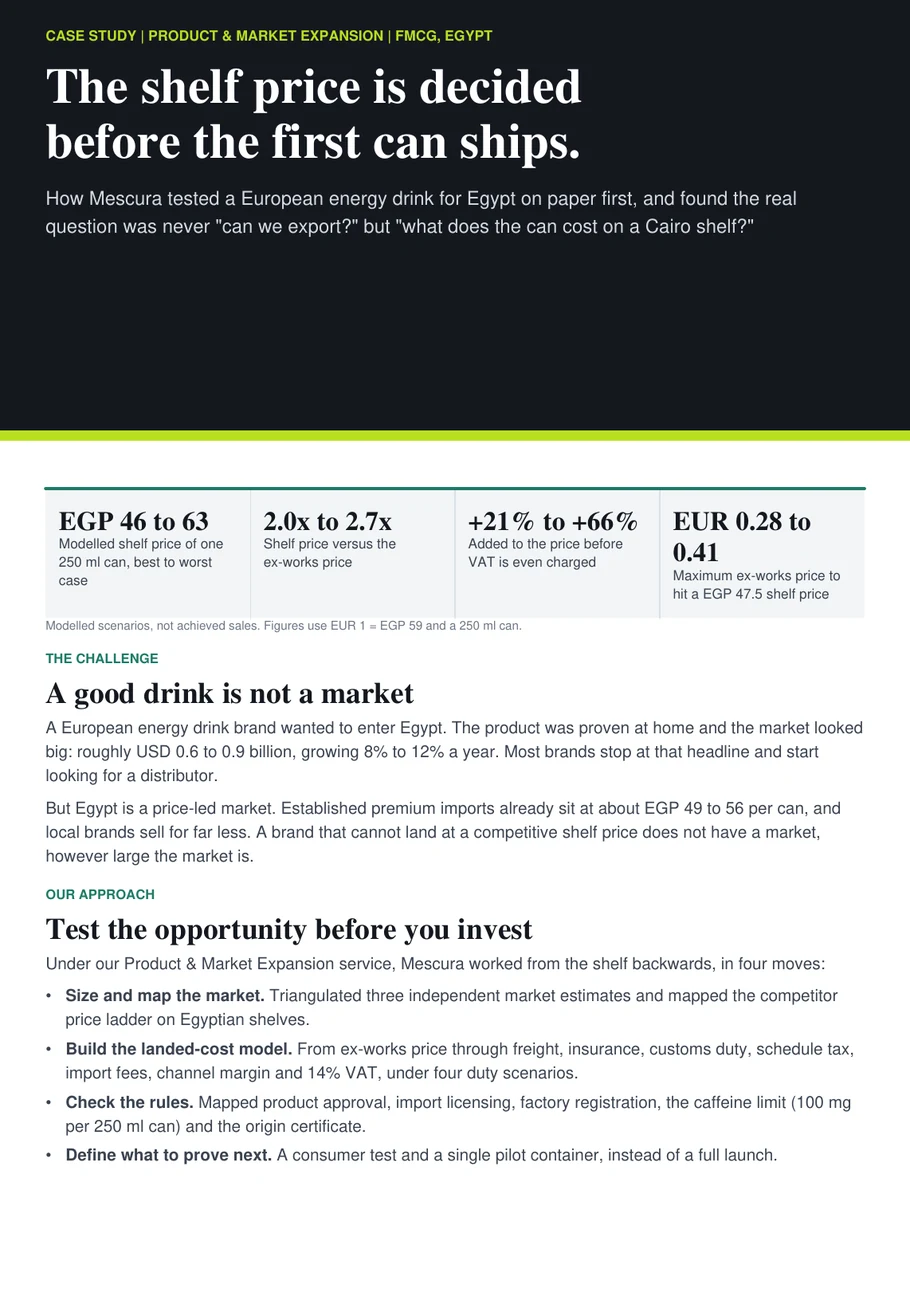
CASE STUDY · FMCG · EGYPT
A European energy drink looked attractive at market-size level. Mescura worked backwards from the Egyptian shelf price, modelling landed cost, duty and tax scenarios before recommending a staged, conditional market entry.
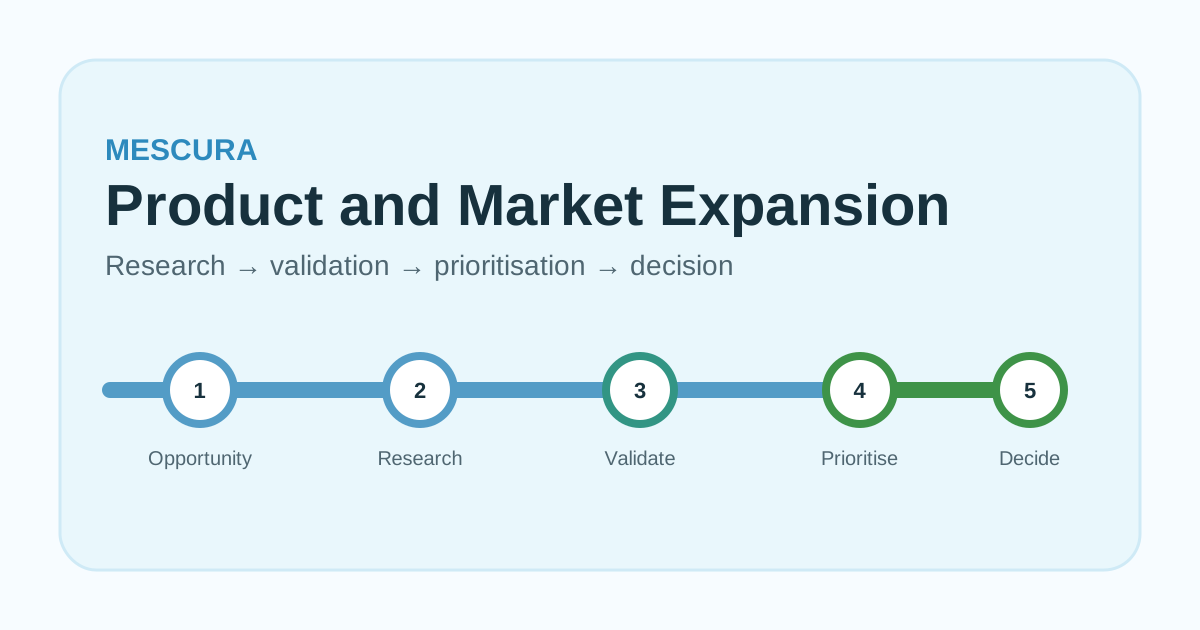
DECISION OUTPUT
The result is a prioritised growth route and an implementation view, not a generic market report.
Discuss an Expansion OpportunityMarket context reference: World Bank trade and market context →